Welcome to my Q & A page. Below you will find links to previously published Q&A articles with some very intriguing men and women who bring unique perspectives to the moral complexities facing humanity, at home and abroad.
Q & A with Coleen Rowley, former F.B.I. agent, 2002 Time Magazine Person of the Year
Q & A with Geoff Farrow, Catholic priest and LGBT activist
Q & A with Jill Koyama, anthropologist and human migration expert

Q & A with Rev. Eric Elnes, UCC minister and host of “Darkwood Brew”
Q&A with Fr. John Dear, Catholic priest and peace aspirant (Originally published on Faithstreet, September 17th, 2014.)
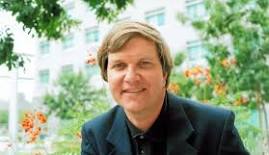
In December of 1993, Catholic priest and author John Dear entered Seymour Johnson Air Force Base in North Carolina and hammered an F-15 fighter jet. The Catholic priest believed he was simply living out the modern example of the prophet Isaiah’s vision to beat swords into ploughshares. Law enforcement authorities thought otherwise, and Dear spent eight months in North Carolina jails. His arrest at the Seymour Johnson Air Force Base was just one of some 75 arrests for acts of civil disobedience in protest of the U.S. military.
For the last three decades, Dear has traveled the globe proclaiming a simple message: the Gospel of Jesus is a message of perfect nonviolence. His life mission has won him many admirers, followers and friends, among them Archbishop Desmond Tutu of South Africa who has nominated Dear for the Nobel Peace Prize.
Dear, now 55, was a member of the Society of Jesus for over thirty years until late last year when he parted ways with the Jesuits over a bitter, and publicly reported, dispute about his role in the Catholic religious order, which happens to be the same Catholic religious order to which Pope Francis belongs.
Though no longer a Jesuit, Dear is still a Roman Catholic priest and is set to start a new chapter of his ministry as a diocesan priest, while still proclaiming his message to wider audiences about the Christian community’s failure to stay true to the teachings of the nonviolent Jesus.
In this Q&A, Dear offers his worldview at what is arguably the dawn of a new age of global insecurity, beginning with his responses to difficult questions about the physical insecurities faced by the youngest people in our world, the unborn, as well as the physical insecurities of women who seek abortions and the doctors who provide them.
TMV: In the aftermath of the 2009 murder of abortion doctor George Tiller at the hands of Scott Roeder, you wrote a column for the National Catholic Reporter calling for a “consistent life ethic” or as the late Cardinal Bernardin of Chicago called it, the “seamless garment” approach to pro-life consciousness. Do you support the 1973 Supreme Court decision of Roe v. Wade and the related Supreme Court decision of Planned Parenthood v. Casey, ensuring a woman’s right to elective abortion?
JD: Yes, I support the Consistent Ethic of Cardinal Bernardin. I am against guns, bombs, killings, executions, war, nuclear weapons, as well as poverty, starvation, racism, sexism, the abuse of children, and abortion, as well as the destruction of the environment, corporate greed, and all forms of violence. I cannot isolate the question of abortion, because the most vocal opponents of abortion support the bombing of children in Iraq, Afghanistan, and Gaza, the building of nuclear weapons at Los Alamos, and the execution of people on death row. I do not believe that they are “pro life.” To be pro-life means to be against the systems of death, against any structure that brings death to a human being or creature or creation. That’s why I side with Mahatma Gandhi, Dorothy Day and Dr. King and espouse global nonviolence as the only solution.
I’m not evading your question. I just come from an entirely different place, with entirely different questions than most. I’m an ex-con, and can’t vote, and decided long ago, like Dorothy Day, Thomas Merton and Daniel Berrigan to live as a citizen first of God’s reign, to resist the U.S. structures of violence, and to let the chips fall where they will
TMV: Would you support prison sentences for abortion providers, abortion-seeking women, and any person who would then be designated as accomplices to the crime?
JD: I think as Thomas Merton stressed that we all need to undergo a radical conversion of heart, especially us Christians; that everyone has to disarm and become nonviolent and start living in a whole new way. That means, no one will join the military, no one will build a bomb, no one will work at a prison, no one will be sexist or racist or carry a gun, no one will support abortion, no one will turn away from a hungry child or a homeless person.
TMV: Do you support the latest legislative maneuverings of abortion opponents to limit access to abortion by placing more onerous restrictions on abortion clinics, causing most to shut down, as has taken place in Texas, for example?
JD: I do not believe that most of these legislative changes work; everything has to change. We are not a democracy; we are an empire, moving toward fascism, or as my friend Julian Assange calls it, “Global totalitarianism.”
TMV: Last year Julian Assange was severely criticized by some in the abortion rights movement and elsewhere for publicly praising Rand Paul, a Republican Senator who is a supporter of WikiLeaks, and who also supports criminalizing abortion. As a friend of Julian Assange, what would you say to his critics who contend that it is myopic and hypocritical for him to portray himself as a global pillar of anti-totalitarianism while simultaneously offering public support for politicians who plan to rain down state violence, in the form of imprisonment, on abortion-seeking women and/or the doctors who perform abortions.
JD: I’m not sure that Julian Assange claims to be a global pillar of anything. But nearly everyone disagrees with the church’s stand against abortion, and very, very few people anywhere support the consistent ethic of life. I say to everyone everywhere that we need to make the connections of nonviolence, and try to become people of nonviolence, and consistent in our positions.
TMV: The Boston Globe’s John Allen has described the pope’s recent remarks on the ISIS threat as “yellow light” to the international community to militarily intervene. Do you agree with that assessment?
JD: I do not think Pope Francis understands Gospel nonviolence, and I have written to him about this, and urged him to write an encyclical on Jesus and nonviolence. But don’t be shocked that I say this. I think very few people understand Jesus’ way of nonviolence. Gandhi and King insisted that Jesus was the most active practitioner of nonviolence in history and that the only people on the planet who don’t know that Jesus was nonviolent are Christians.
TMV: What would you counsel Christian Iraqi parents who are being attacked in their homes by ISIS fighters? If they choose to defend themselves and their children would they, in that moment at least, be turning their backs on the teachings of Jesus?
JD: I met many Catholics in Iraq, including the archbishop of Baghdad. I would never counsel them. They understand the Gospel of Jesus much better than us. I would listen to them, and I did. I’m trying to counsel North American Catholics who have long ago rejected Jesus. I still say we are the problem. We need to start obeying his teachings, and I quote: “Put down the sword, love your enemies, offer no violent resistance to one who does evil, blessed are the peacemakers, hunger and thirst for justice, seek first God’s reign and God’s justice…”
TMV: The videos of the beheadings of James Foley and Steven Sotloff by ISIS have shocked the world. If other ISIS hostages tried to physically resist being handcuffed before getting beheaded, by physically subduing the executioner, though not killing him, would that be a form of offering “violent resistance” and thereby be in direct violation of Jesus’ command?
JD: The real questions are: why are we there, why were they there, whose side are we on? I have been to Iraq and after 23 years of bombing, any American is now seen as complicit with the murder of children. I do not advocate any violence, and want all violence to stop, but these killings are the natural consequence of the U.S. having killed some 1.4 million Iraqis, including hundreds of thousands of children under five according UNICEF and the Vatican, and tortured people in Abu Graib.
TMV: You have called for the Catholic Church to jettison just war doctrine. What would that look like, at the practical level, for the Catholics of Ukraine as they interact with invading Russian soldiers?
JD: The just war theory has nothing to do with the nonviolent Jesus. He didn’t say “Offer no violent resistance to one who does evil” and “love your enemies, but if they’re really bad, and you follow these seven conditions, kill them all!” That’s the whole point: Jesus was perfectly nonviolent, taught perfect nonviolence, and modeled perfect nonviolence. His last words to the church in the Garden of Gethsemani were “Put down the sword.”
What would it look like? Like the Gospel. We’d all start following Jesus, acting like Jesus, talking like Jesus, and becoming nonviolent like Jesus. The church would be the center of all training for nonviolence and resistance; the clergy would lead the way in nonviolent resistance. I have seen this with my own eyes—when I lived in El Salvador and worked with the Jesuits who were later assassinated.
TMV: A couple of weeks ago The Tablet reported that the Catholic archbishop of Kiev is telling people that they need to give their lives for Ukraine’s independence. How do you conceive the role of the Catholic clergy in this kind of dangerous situation?
JD: The poor Archbishop of Ukraine is totally wrong. He should model Gospel nonviolence, call everyone to practice it, and call upon the world for nonviolent aid—he should not encourage the bloodshed and war making.
But he’s not the first of course to betray the nonviolent Jesus. The church long ago rejected the nonviolence of Jesus, actually at the beginning of the fourth century, when the Roman emperor claimed now to be a Christian, said all Christians could join the Roman empire, and said Christians could now fight in the Roman army.
TMV: In these past several months since departing from the Society of Jesus, have you positively discerned that God is not calling you to found a new Catholic religious order?
JD: I am definitely not feeling a call to found a religious order, but as I suspected feel encouraged by the God of peace to continue to work for peace, to practice and teach Gospel nonviolence, and to follow the nonviolent Jesus in this world of war. I’m still heartsick over leaving the Jesuits, but nearly every provincial and superior I ever had opposed my work for peace and nonviolence. Once, when I was young, and I told my provincial that I wanted to promote Gospel nonviolence like Gandhi and King, he stood up, said Jesuits do not work for peace or practice nonviolence, and kicked me hard in the shin. “Let me see you be nonviolent now?” he said with a sneer.
TMV: Sometimes facial expressions can convey even more than words or physical actions. What do you think your provincial was trying to communicate to you when he sneered at you?
JD: He, like others, was threatened by my stand for peace and nonviolence, and was trying to assert his authority. Rampant authoritarianism, as Pope Francis said last year, has become one of the key problems in the hierarchy–abusing obedience to show one’s power over another, as opposed to walking equally, humbly, peacefully as disciples of Jesus.
 Follow the Light
